Scifi
Ariel

2
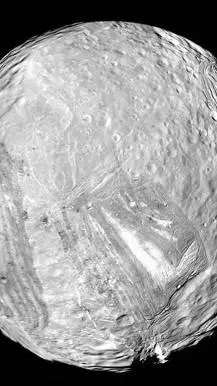
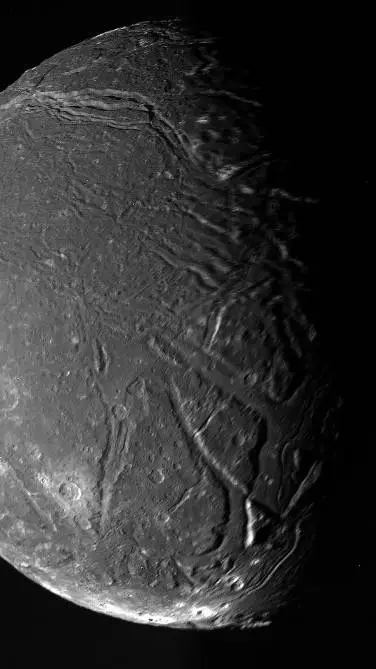
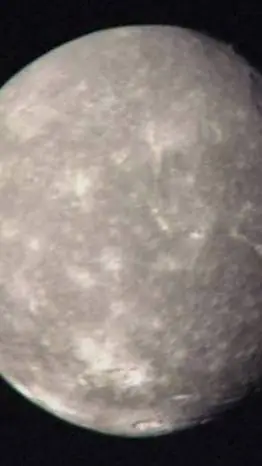
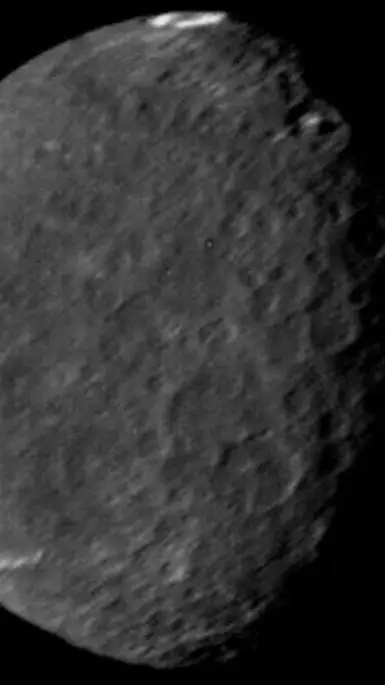
Your spacecraft’s retro-thrusters fire, casting a sharp orange glare over a desolate expanse of shadow. The vehicle enters the orbital coordinates of the major Uranian satellite network, tracking a mean orbital radius of roughly 191,000 kilometers from the central gas giant. The vessel begins its final descent phase toward the brightest moon in the system. The onboard navigation arrays confirm touchdown on a rigid, unforgiving crust composed of roughly 50% water ice, 30% silicate rock, and 20% frozen carbon dioxide. A cloud of fine, micrometeorite-tilled regolith dust billows outward before instantly settling back onto the landscape, trapped in a weak surface gravity of just 0.269 m/s². Outside the cockpit glass, the landscape is illuminated by faint, heavily diluted sunlight. Because this world possesses a geometric albedo of 0.39, the reflective ice glimmers with an intense, stark brilliance against the black vacuum of space. Through the panoramic viewport, the colossal pale blue-green silhouette of Uranus dominates the horizon, spanning 12 degrees across the sky. Due to absolute tidal synchronization, this moon is permanently tidally locked; it keeps this identical face turned toward the cloud tops of its parent planet for eternity. Running parallel to the landing zone are the staggering walls of the Kachina Chasmata, an immense structural graben system carving 622 kilometers across the southern hemisphere. The deep fault valleys tell a silent story of ancient extensional tectonics, where global tensional stress tore the crust apart as the interior expanded during freezing. The flat canyon floors show smooth plains created by ancient cryovolcanism, where liquid mixtures of ammonia and water welled up from the deep mantle to flood and erase ancient impact craters. Suddenly, the ship's communication console hums to life, overriding the pilot's main terminal.

 astronomy